
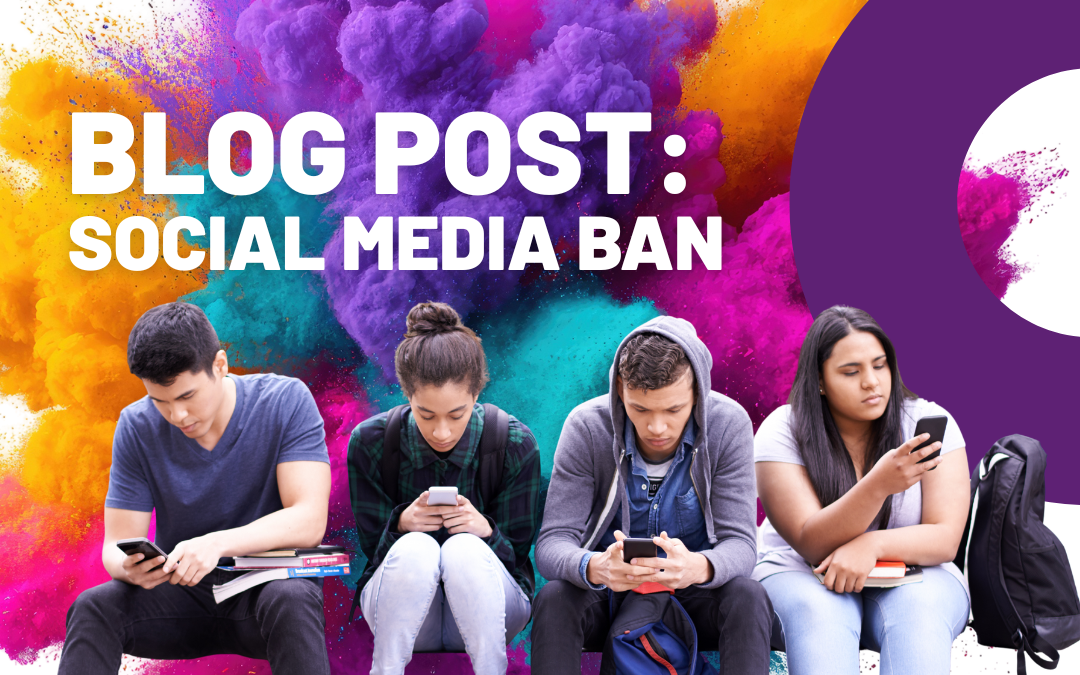
The UK Government has confirmed that a ban on social media for under-16s will take effect in spring next year.
While this marks a significant shift in how young people will interact online, it doesn’t come as a surprise. Conversations, consultations and growing concern about the impact of social media on mental health have been building for a while.
The UK is not alone. Australia became the first country in the world to introduce a nationwide ban for the same age group in December 2025. China, Indonesia and Vietnam have already implemented similar restrictions, with other nations soon to follow suit. This global trend signals an increasing urgency to respond to the perceived harms of digital spaces.
Announcing the new measures, Prime Minister Keir Starmer stated that social media is “designed to be addictive”, arguing that a ban could offer children greater safety, more time away from screens and the freedom to grow up without constant digital pressures.
But as with any major intervention, the quandary remains: will it actually work and what will it mean for young people’s mental health?
Looking at Australia provides an early indication. Research from the Molly Rose Foundation found that three in five (61%) Australian 12–15-year-olds, who had accounts before the ban, still found ways to access social media platforms after restrictions were introduced.
This raises another important question. If young people can — and will — find ways of navigating around restrictions, are we addressing the root cause or are we merely concentrating on the symptoms?
Through our PEACE of Mind programme, we explore social media with young people in a balanced way, acknowledging both its risks and benefits. What’s clear is that young people are not passive users. They understand algorithms, targeted content and how platforms are designed to keep them engaged.
However, awareness alone doesn’t fully protect them from harm.
Platforms like Snapchat, TikTok and YouTube continue to face pressure to address harmful content. From cyberbullying and peer pressure to more complex and concerning trends, such as toxic subcultures like the manosphere, these environments can contribute to anxiety, low self-esteem and a distorted sense of reality. More recently, the pogrom we witnessed on our own streets was driven, in no small part, by viral online disinformation.
At the same time, social media is not universally harmful.
The young people we engage with have told us that they want more support to understand and manage the emotional impacts of social media, including honest conversations about how it makes them feel and the pressures of constant connectivity. Alongside this, they feel that adults often misunderstand the positive role that social media plays in maintaining friendships and organising social lives. Young people are frustrated that decisions about social media are sometimes made without fully listening to their experiences or perspectives.
The Potential Benefits
From a mental health perspective, a ban could:
- Reduce exposure to harmful content
Limiting access may protect young people from cyberbullying, unrealistic body standards, harmful trends and toxic communities that negatively impact self-esteem and wellbeing. - Improve sleep and focus
Less time online, particularly late at night, can support better sleep patterns, which are closely linked to emotional regulation and mental health. - Encourage offline connection
With fewer digital distractions, young people may be more likely to engage in face-to-face relationships, hobbies and physical activities. All of these are protect positive wellbeing. - Lower addictive behaviours
Many platforms are designed to encourage constant scrolling and checking. A ban could help reduce compulsive use and dependency at a critical stage of brain development.
The Risks and Challenges
On the other hand, there are also important considerations when it comes to mental health:
- Loss of safe and supportive communities
For many young people, especially those who feel isolated or marginalised, online spaces are not toxic; they are a lifeline. Social media can provide connection, identity exploration and peer support that may not exist offline. - Displacement rather than prevention
As seen in Australia, young people may simply find ways around restrictions, potentially moving to less regulated or more harmful platforms, increasing risk rather than reducing it. - Impact on identity and belonging
Adolescence is a time for exploration. Online platforms can play a role in helping young people understand themselves and find communities that reflect their lives. - Potential stigma or secrecy
Restrictions may push social media use underground, making it harder for parents, carers and educators to have open conversations about online experiences and mental health.
Prior to the Prime Minister’s announcement this week, we discussed the ban with a PEACE of Mind group in Coleraine. The participants contended that adults seem to have already made up their minds about the ban. “I think they only talked to teenagers who agree with the ban,” said one person. This seemed to represent a general sentiment amongst the attendees.
Others were frustrated that decisions around social media were being made by people who didn’t appear to understand the topic very well. Similarly, policies aimed at addressing teenage mobile phone use have been designed, they believed, without adequate consultation.
The ban raises valid concerns and reflects a genuine desire to protect young people’s mental health. That said, the evidence so far suggests that restriction alone may not be enough.
A more effective approach may lie in education, digital literacy and platform accountability, alongside controls and checks. Equipping users with the skills to navigate online spaces safely, while also holding tech companies responsible for the environments they create, is perhaps a more sustainable route to follow.
Social media is neither entirely good nor entirely harmful and its impact on mental health depends on how it is used, experienced and regulated.
As we move towards 2027, state of uncertainty remains. Should young people be online and, if they are, how do we help them to be there safely?
Our PEACE of Mind Programme is a FREE mental health and personal development programme for young people aged 11 to 25 in Northern Ireland and Ireland’s border counties.
PEACE of Mind provides structured, supportive environments where participants can build confidence, develop emotional resilience and strengthen their overall wellbeing. Led by trained youth facilitators, our youth‑focused sessions encourage individuals to explore their emotions, understand their experiences and develop practical coping strategies that help them feel more grounded.
Whether a young person is seeking someone to talk to, tools to manage day‑to‑day pressures or simply a safe place to be themselves, PEACE of Mind offers trusted, welcoming and accessible support. Everything we do is built around need, creating space to connect, grow and thrive.
PEACE of Mind is supported by PEACEPLUS, a programme managed by the Special EU Programmes Body (SEUPB).
Want to find out more? Just follow the link>> Free Mental Health Programme for Young People in Northern Ireland